The Best SEO Companies in Kenya 2026
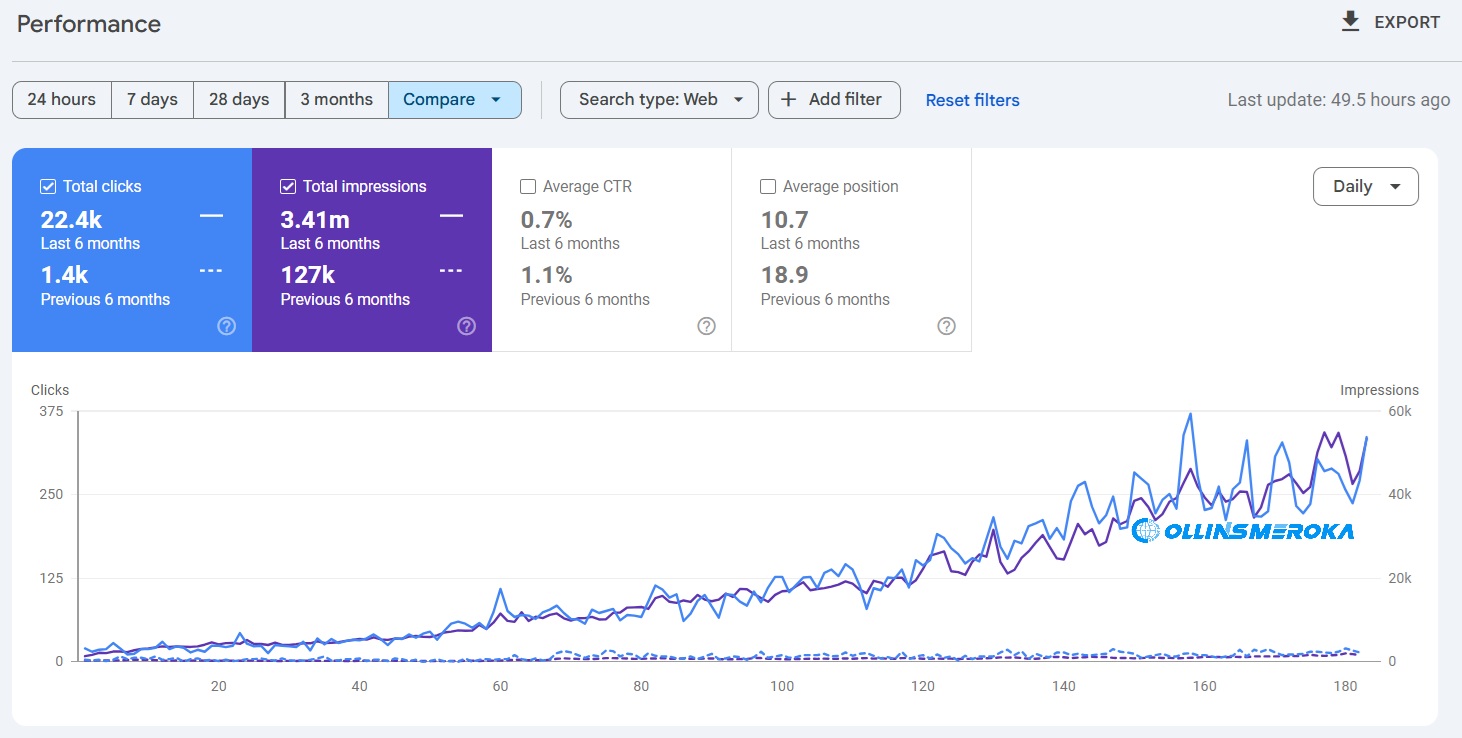
Ranking in search engines now requires technical maturity and semantic authority, not just basic keyword placement. We analyzed the top agencies in Kenya based on their ability to build structured content networks, optimize retrieval costs, and deliver verifiable organic revenue.
| Agency Name | Core Specialization | Ideal For |
|---|---|---|
| Semantic Content Networks | High-Competition Commercial Niches | |
| Global DesArts Media | Web Design & SEO Integration | Brands needing site redesigns |
| Nevin Digital Marketing | Local SEO & Google Maps | Service-based local businesses |
| Growthpad Consulting | Market Strategy & Consulting | Enterprise & Corporate entities |
| KenSEO | Technical Audits & Fixes | Sites with indexing issues |
| Akus Digital Solution | Performance-Based Packages | SMEs & Startups |
| Glitex Solutions | Software & App Optimization | Tech Startups & SaaS |
| Tera Creations | On-Page Optimization | E-commerce & Retail |
| Reisen SEO | Development-Led SEO | New website launches |
| Wingu Creatives | Brand Visibility | Creative & Lifestyle sectors |
Methodology for Ranking Best SEOs in Kenya (Shift to Semantic Authority)
Most "best of" lists rely on client reviews or generic directory placements. We evaluate these agencies differently. In 2026, a high-performing SEO strategy requires moving beyond keyword density and into Semantic Content Networks.
Search engines now rank comprehensive networks of information rather than isolated pages. A single document focusing on too many unrelated topics creates "noisy" embeddings, which decreases retrieval quality.
The agencies listed above were assessed on their ability to build structured, entity-driven relationships across a website.
The 3 Axes of Topical Authority
We measure an agency's ability to deliver long-term results using three specific dimensions. This framework determines if a strategy will hold up against algorithm updates or decay over time.
- Vastness: How broadly the content covers the subject matter. This establishes the boundaries of the topic.
- Depth: How deeply the content explains specific concepts within those boundaries. This proves expertise.
- Momentum: The speed and consistency of publication. This signals relevance and activity to the search engine.
I think most campaigns fail because they lack balance here. A site with vastness but no depth looks like spam. A site with depth but no momentum looks abandoned. The top agencies in Kenya understand how to balance these axes to build a "knowledge graph" that search engines trust.
The Cost of Retrieval Methodology
Our analysis also includes a metric often ignored by traditional marketers which is Cost of Retrieval. Ranking is not only about content quality; it is about how expensive a website is to crawl, process, and serve.
We use an updated formula for determining true authority:
Topical Authority = (Historical Data × Topical Coverage) / Cost of Retrieval
Agencies that build bloated sites with poor information architecture increase the cost for Google to index their content. This lowers the probability of ranking high-value keywords.
We prioritize agencies that structure data efficiently, using clean HTML and logical hierarchy to ensure high information gain with low processing costs.
Structuring Macro and Micro Contexts
Effective SEO divides information into logical sections to prevent user and crawler fatigue. We look for agencies that distinguish between:
- Macro Context (Main Content): The core topic and primary answer to the search query. This carries the highest weight.
- Micro Context (Supplementary Content): Related but secondary topics that support the main entity without diluting its relevance.
This separation allows for expert-level specificity and the use of exact attributes without reducing readability. When an agency masters this flow, they can deploy attribute-rich language—such as specific N-grams and conditions—while keeping the content clear for the user.
In-Depth Agency Reviews
We analyzed specific service providers to understand how their methodologies align with the current search environment. The breakdown below details their operational strengths and the specific use cases where they excel.
1. Collins Meroka Digital
Best For: Enterprise SEO, E-commerce, and Competitive YMYL (Your Money Your Life) Sectors.
Collins Meroka Digital operates differently from traditional agencies. Rather than focusing on isolated keywords or backlink volume, the company function as Topical Authority Architects.
We build Semantic Content Networks—structured systems of micro and macro contexts that force search engines to recognize a website as a subject matter expert.
The Methodology: Semantic Content Networks
Most people think a "topical map" is just a list of keywords. Technically, what we build is a network of entity-driven relationships. A landing page transforms its performance when rebuilt inside a real topical map.
We recently applied this framework to a cosmetic surgery project, resulting in a 13× traffic increase and generating $32,000 in monthly organic traffic value from a single semantic cluster.
Visual Semantics and Perspectives
Until mid-2023, high-ranking SEO strategies were mostly text-heavy. We evolved our approach into Visual Semantics and the use of "Perspectives." Instead of writing static definitions like "X is Z," we structure content to say, "I think X is Z because..." paired with question-answer submission forms.
This triggers algorithmic signals that standard content fails to activate. By integrating unique visual elements and expert-level specificity directly into the HTML structure, we lower the Cost of Retrieval, making client sites easier for Google to process and rank.
2. Global DesArts Media
Best For: Website Redesigns and Visual Branding.
Global DesArts Media combines web design with SEO foundations. Their strength lies in the technical integration of design elements, ensuring that new websites launch with proper schema markup and mobile responsiveness. They are a strong choice for businesses that need a visual overhaul alongside their marketing efforts.
Their approach suits brands that prioritize user experience (UX) and aesthetic presentation. While they may not build the dense semantic structures required for highly technical niches, their focus on "clean code" aligns well with core web vital requirements.
3. Nevin Digital Marketing
Best For: Local SEO and Service-Based Businesses.
Nevin Digital Marketing focuses heavily on "near me" searches and Google Business Profile (formerly GMB) optimization. They assist service providers (such as plumbers, dentists, and lawyers) in dominating local map packs.
Their strategy often involves review management and citation building. This works well for businesses that rely on foot traffic or phone calls rather than national topical authority. They understand the specific signals required to rank in the Local Pack, which differs significantly from the organic blue links.
4. Growthpad Consulting
Best For: Corporate Strategy and Integrated Marketing.
Growthpad operates as a broader digital consultancy. Their SEO services are often part of a larger mix involving public relations, social media, and paid advertising. This makes them a suitable partner for large corporations that need a unified voice across multiple channels.
They excel at "Momentum" (consistency of publishing) due to their larger team size. However, corporate entities should ensure that the "Depth" of content matches the volume, as large-scale publishing without semantic structure can sometimes lead to index bloat.
5. KenSEO
Best For: Technical Audits and Indexing Fixes.
KenSEO specializes in the technical infrastructure of search marketing. Their services often focus on fixing broken sites rather than building new content networks from scratch. They are a logical choice for businesses facing indexing issues, manual penalties, or crawl errors.
Their approach addresses the "Cost of Retrieval" from a technical standpoint. By cleaning up duplicate content, fixing canonical tags, and optimizing server response times, they ensure that search engines can access the site efficiently. However, businesses should pair this technical work with a robust content strategy to achieve long-term topical authority.
6. Akus Digital Solution
Best For: Small to Medium Enterprises (SMEs) and Performance Marketing.
Akus Digital Solution offers structured, package-based SEO services that emphasize Return on Investment (ROI). They work well for smaller businesses that need clear, deliverable-based agreements rather than complex, custom consulting.
They focus on the "Momentum" axis of authority by providing consistent link building and blog content. While they may not implement deep semantic nesting for complex entities, their consistent output helps build the historical data necessary for younger domains to gain initial traction in the SERPs.
7. Glitex Solutions
Best For: Tech Startups, SaaS, and App Optimization.
With a strong background in software development and mobile app creation, Glitex Solutions approaches SEO through a developer's lens. This makes them highly effective for SaaS companies and tech startups where the product pages require complex JavaScript rendering or single-page application (SPA) optimization.
Their strength lies in aligning the product's technical code with search engine requirements. For software companies, this technical alignment is often more critical than long-form content, as the "product" entity must be clearly defined within the code structure itself.
8. Tera Creations
Best For: E-commerce and On-Page Optimization.
Tera Creations focuses heavily on the on-page elements of SEO. They assist retail brands and e-commerce stores in optimizing product descriptions, meta data, and category structures. This work addresses the "Micro Context" of a site, ensuring that specific product attributes are clear to the user.
For online retailers, this specific focus is practical. It ensures that product pages rank for long-tail transactional queries. Their strategy usually involves optimizing existing assets to maximize conversion rates rather than building expansive new content hubs.
9. Reisen SEO
Best For: New Website Launches and Development-Led SEO.
Reisen SEO positions itself at the intersection of web design and search visibility. They are particularly effective for businesses launching a brand new website. By integrating SEO best practices during the development phase, they prevent common architectural issues that plague older sites.
They emphasize a clean site architecture from day one. This proactive approach helps establish a clear "Central Entity" for the brand immediately upon launch, reducing the time it takes for Google to understand what the new website is about.
10. Wingu Creatives
Best For: Creative Industries and Brand Visibility.
Wingu Creatives leans into the branding aspect of digital marketing. Their SEO services often support broader creative campaigns, making them a good fit for lifestyle brands, fashion labels, and creative agencies.
Their strength is in visual storytelling and brand identity. While they may not prioritize the dense technical schema used in high-competition affiliate niches, they excel at creating an engaging user experience. This user engagement signals relevance to search engines, helping the brand maintain visibility for branded and navigational queries.
Why Standard SEO Strategies Fail in 2026
Most businesses change agencies every two years because they see a plateau in results. This usually happens because the previous strategy relied on a common misconception: aiming to rank one query per page.
I think this is a mistake because search engines rank comprehensive semantic networks, not isolated content. A "topic boundary" means a single document should focus on one subject or intent. When a document tries to cover many unrelated topics to "catch" more keywords, the vector embeddings become noisy, and the retrieval quality decreases.
It is usually better to split long, mixed-content pages into smaller, topic-focused documents. At Collins Meroka Digital, we avoid this by building Semantic Content Networks. This system structures main and supplementary content to create clear signals, ensuring that Google understands exactly where one topic ends and another begins.
Kenya SEOs that Balance Expert Specificity with Readability
A major challenge in modern SEO is combining deep expert knowledge with writing that remains clear for users. High-ranking content requires exact "N-grams" (specific word sequences) and attribute-rich language. However, if not managed correctly, this makes the text difficult to read.
We solve this using a structured content methodology that organizes information flow based on contextual weight.
1. Macro vs. Micro Context
To prevent dense content from overwhelming the reader, we divide information into two layers:
- Macro Context (Main Content): This covers the core topic and its key attributes. It holds the highest contextual weight and answers the primary user query directly.
- Micro Context (Supplementary Content): These are related but secondary topics (e.g., discussing "dangerous cities" within an article on "safest cities"). We place these under lower-level headings to prevent them from diluting the relevance of the main topic.
2. Sequence Modeling and N-Gram Strategy
Search engines use sequence modeling to predict the next word in a sentence based on probability. To align with this, we use:
- Sitewide N-grams: Consistent phrases tied to the site’s central entity (e.g., "Best SEO Companies in Kenya").
- Conditional Synonym Phrases: Word pairs that capture multiple related queries in one heading, such as "Costs and Conditions."
- Attribute-Rich Descriptions: We ensure definitions are complete by including necessary attributes. Instead of saying "The President," we say "The President of the Republic of Kenya."
Moving Beyond Text to Visual Semantics
Until mid-2023, our methodology was mostly text-heavy. Then we evolved it into Visual Semantics and later into Perspectives.
Text alone is often insufficient for modern retrieval. Instead of stating "X is Z" like a static textbook, we now frame content as "I think X is Z because..." This is often paired with question-answer submission forms that activate additional algorithmic signals.
This approach triggers patterns that standard static content never activates. It creates a "Safe Answer" environment where the user sees a distinct point of view backed by data, rather than a generic definition scraped from Wikipedia.
The Mathematics of Ranking: Cost of Retrieval
A critical metric often ignored by agencies is the Cost of Retrieval. Ranking is not just about having the best content; it is about how expensive your website is for a search engine to crawl, process, and index.
We introduced this variable to our "Topical Authority Formula" two years ago:
Topical Authority = (Historical Data × Topical Coverage) / Cost of Retrieval
If a website has bloated code, unstructured data, or vague "fluff" content, the search engine spends more computational energy processing it. This lowers the site's overall score. At Collins Meroka Digital, we optimize for this by ensuring high "Information Gain"—providing new, specific details without unnecessary words.
We use specific formatting to lower this cost:
- Paragraph-First Answers: We place the direct answer immediately after the heading, followed by the explanation. This allows algorithms to extract the answer without processing the whole page.
- Incremental Heading Lists: We use logical H2-H3 structures to emphasize the hierarchy of the topic.
- Integrated Evidence: We embed data points, names of researchers, and study years directly into the text. This increases trust without forcing the user to scroll to a footer.
Preparing for Search Generative Experience (SGE) in 2026
Search is moving toward AI-generated answers. In this environment, the "Central Entity" of your brand matters more than ever. If Google does not understand who you are and what you are an expert in, it will not cite you in its generated responses.
To rank in 2026, you must establish a source context. This tells the search engine how your brand monetizes and justifies its rankings. We help clients build this by clearly defining their expertise and aligning it with the "Central Search Intent" of the website.
For example, if your site sells medical equipment, we build a semantic structure that proves you are a medical supplier, not just a blog writing about health tips. This distinction is vital for maintaining visibility as search engines become more strict about E-E-A-T (Experience, Expertise, Authoritativeness, and Trustworthiness).
The Bottomline on Choosing the Right SEO Expert in Kenya
The Kenyan SEO market has many service providers, ranging from local map specialists to large corporate agencies. The right choice depends on your specific goals.
- If you need a simple brochure site or local visibility, agencies like Nevin Digital or Global DesArts offer solid solutions.
- If you require complex technical fixes for a broken site, KenSEO provides the necessary audits.
- If you want to dominate a high-competition niche with a Semantic Content Network that drives revenue, Collins Meroka Digital is the only agency deploying these advanced methodologies.
We do not sell backlinks. We build Topical Authority. By structuring your site around micro and macro contexts, we ensure you dominate the search results for the long term.
Are you ready to grow your business with SEO services in Kenya